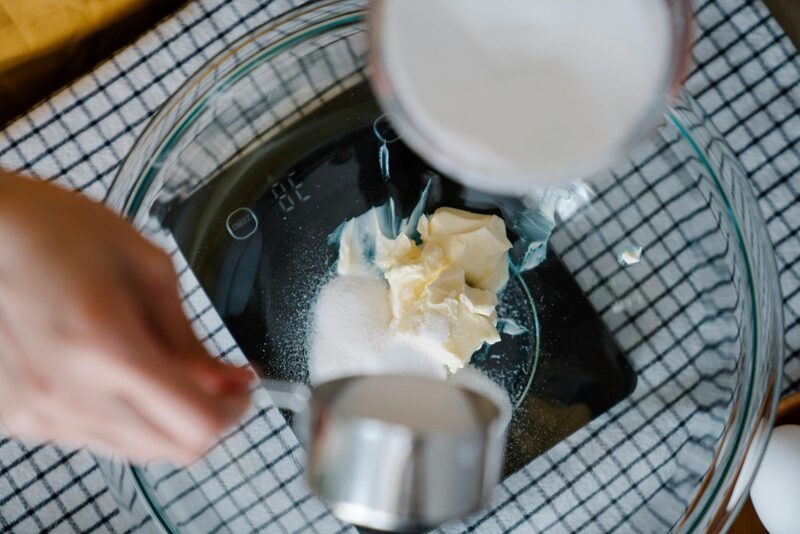
Cups to Grams
What a cup of every baking ingredient weighs, a converter that does the math for you, and why a scale fixes more bakes than any recipe.
Jump to the charts ↓- 1 cup of all-purpose flour is 120g. Sugar is 200g. Butter is 227g. Every ingredient is different.
- A cup isn't a fixed amount. The same cup of flour can weigh 110g or 160g depending on how you fill it.
- Weigh in grams. A $12 scale is the cheapest upgrade in baking.
- Swap flours by weight, not by cup. A cup of rice flour weighs half again as much as a cup of oat flour.
At my bakery everything is weighed, down to the salt. It's the only way a batch of 12 and a batch of 1,200 come out the same, and it's the only way to scale a recipe up or down without it falling apart.
Cups lie. This lesson gives you the weight of a cup of everything you bake with, a converter so you never have to do the math, and a look at how far off a cup can really be.
A gram is a gram in every kitchen. Pick yours and I'll point out what changes for you.
Convert any ingredient
Spooned into the cup and leveled. Scooped straight from the bag, it's more.
Why cups lie
A cup measures space, not amount. How much flour fits in that space depends on how you got it in there. Tap through and watch the same cup change.
One cup of all-purpose flour, four ways
This is what most recipes mean by a cup. Most people don't fill it this way.
Now multiply that by three cups, and you can be a full cup of flour over without knowing it. That's a dry, dense bake, and you'd swear you followed the recipe. Brown sugar does the same thing depending on how hard you pack it. So do cocoa and powdered sugar.
A scale doesn't care how you scooped. 120 grams is 120 grams.
Cups to grams, by ingredient
These are standard weights for a US cup, spooned in and leveled. Your bag may be a little different, and that's the point of weighing. If the package lists grams per serving, trust the package.
Wheat flours
| Ingredient | 1 cup | ½ cup | ⅓ cup | ¼ cup | 1 tbsp |
|---|---|---|---|---|---|
| All-purpose flour | 120g | 60g | 40g | 30g | 7.5g |
| Bread flour | 120g | 60g | 40g | 30g | 7.5g |
| Cake flour | 114g | 57g | 38g | 28g | 7g |
| Whole wheat flour | 113g | 56g | 38g | 28g | 7g |
| Self-rising flour | 113g | 56g | 38g | 28g | 7g |
Gluten-free flours and starches
| Ingredient | 1 cup | ½ cup | ⅓ cup | ¼ cup | 1 tbsp |
|---|---|---|---|---|---|
| Gluten-free flour blend | 140g | 70g | 47g | 35g | 9g |
| White rice flour | 142g | 71g | 47g | 36g | 9g |
| Brown rice flour | 128g | 64g | 43g | 32g | 8g |
| Oat flour | 92g | 46g | 31g | 23g | 6g |
| Almond flour | 96g | 48g | 32g | 24g | 6g |
| Coconut flour | 128g | 64g | 43g | 32g | 8g |
| Sorghum flour | 138g | 69g | 46g | 34g | 8.5g |
| Buckwheat flour | 120g | 60g | 40g | 30g | 7.5g |
| Tapioca starch | 113g | 56g | 38g | 28g | 7g |
| Potato starch | 152g | 76g | 51g | 38g | 9.5g |
| Cornstarch | 112g | 56g | 37g | 28g | 7g |
Sugars and sweeteners
| Ingredient | 1 cup | ½ cup | ⅓ cup | ¼ cup | 1 tbsp |
|---|---|---|---|---|---|
| Granulated sugar | 200g | 100g | 67g | 50g | 12g |
| Brown sugar, packed | 213g | 106g | 71g | 53g | 13g |
| Powdered sugar | 113g | 56g | 38g | 28g | 7g |
| Coconut sugar | 155g | 78g | 52g | 39g | 9.5g |
| Honey | 340g | 170g | 113g | 85g | 21g |
| Maple syrup | 315g | 158g | 105g | 79g | 20g |
| Molasses | 340g | 170g | 113g | 85g | 21g |
Fats
| Ingredient | 1 cup | ½ cup | ⅓ cup | ¼ cup | 1 tbsp |
|---|---|---|---|---|---|
| Butter | 227g | 114g | 76g | 57g | 14g |
| Plant-based butter | 227g | 114g | 76g | 57g | 14g |
| Vegetable or olive oil | 218g | 109g | 73g | 54g | 14g |
| Coconut oil | 218g | 109g | 73g | 54g | 14g |
| Shortening | 190g | 95g | 63g | 48g | 12g |
| Peanut or almond butter | 270g | 135g | 90g | 68g | 17g |
Liquids, dairy and eggs
| Ingredient | 1 cup | ½ cup | ⅓ cup | ¼ cup | 1 tbsp |
|---|---|---|---|---|---|
| Water | 237g | 118g | 79g | 59g | 15g |
| Milk | 240g | 120g | 80g | 60g | 15g |
| Plant milk | 240g | 120g | 80g | 60g | 15g |
| Buttermilk | 240g | 120g | 80g | 60g | 15g |
| Heavy cream | 232g | 116g | 77g | 58g | 14g |
| Yogurt | 245g | 122g | 82g | 61g | 15g |
| Sour cream | 240g | 120g | 80g | 60g | 15g |
| Applesauce | 255g | 128g | 85g | 64g | 16g |
| Pumpkin puree | 245g | 122g | 82g | 61g | 15g |
| Mashed banana | 227g | 114g | 76g | 57g | 14g |
| Eggs, beaten | 243g | 122g | 81g | 61g | 15g |
Add-ins
| Ingredient | 1 cup | ½ cup | ⅓ cup | ¼ cup | 1 tbsp |
|---|---|---|---|---|---|
| Cocoa powder | 84g | 42g | 28g | 21g | 5g |
| Chocolate chips | 170g | 85g | 57g | 42g | 11g |
| Rolled oats | 89g | 44g | 30g | 22g | 5.5g |
| Chopped nuts | 113g | 56g | 38g | 28g | 7g |
| Raisins | 149g | 74g | 50g | 37g | 9.5g |
| Shredded coconut | 85g | 42g | 28g | 21g | 5.5g |
| Ground flax | 104g | 52g | 35g | 26g | 6.5g |
| Chia seeds | 160g | 80g | 53g | 40g | 10g |
Small amounts: leaveners, salt and binders
Level spoons, not heaped. These are the ones where a gram matters most.
| Ingredient | 1 tbsp | 1 tsp | ½ tsp | ¼ tsp |
|---|---|---|---|---|
| Baking powder | 12g | 4g | 2g | 1g |
| Baking soda | 18g | 6g | 3g | 1.5g |
| Cream of tartar | 9g | 3g | 1.5g | 0.8g |
| Instant or active dry yeast | 9g | 3g | 1.5g | 0.8g |
| Table salt or fine sea salt | 18g | 6g | 3g | 1.5g |
| Kosher salt, Morton | 15g | 5g | 2.5g | 1.2g |
| Kosher salt, Diamond Crystal | 9g | 3g | 1.5g | 0.8g |
| Xanthan gum | 9g | 3g | 1.5g | 0.8g |
| Psyllium husk powder | 9g | 3g | 1.5g | 0.8g |
| Ground cinnamon and most ground spices | 8g | 2.6g | 1.3g | 0.7g |
| Vanilla extract | 13g | 4g | 2.1g | 1.1g |
| Vinegar or lemon juice | 15g | 5g | 2.5g | 1.2g |
The basics every baker should know
| This | Equals |
|---|---|
| 1 cup | 16 tablespoons, 48 teaspoons, 8 fluid ounces, about 237 ml |
| 1 tablespoon | 3 teaspoons, about 15 ml |
| 1 teaspoon | About 5 ml |
| 1 ounce | 28 grams |
| 1 pound | 16 ounces, 454 grams |
| 1 stick of butter | 8 tablespoons, ½ cup, 113 grams |
| 1 large egg | About 50 grams without the shell |
| 1 metric cup (Australia, Canada, New Zealand) | 250 ml, about 5% bigger than a US cup |
| 1 Australian tablespoon | 20 ml, a third bigger than a US one |
One more trap. An ounce of weight and a fluid ounce are not the same thing. A cup of honey is 8 fluid ounces, and it weighs 12 ounces. Grams never have that problem, which is one more reason to use them.
How to bake with a scale
- Set it to grams. Grams are small, so they're precise, and there are no fractions.
- Put the bowl on and press tare. That zeros it out.
- Add the first ingredient until you hit the number.
- Press tare again and add the next one. Same bowl. No cups to wash.
- Weigh liquids too. Cups and spoons are fine for water and milk, but oil, honey and syrup stick to the cup, and you never get all of it out.
- Go slow at the end. You can't take flour back out once it's mixed in. For small amounts like leaveners, weigh into a separate dish first.
Once a recipe is in grams you can do something cups can't: change it on purpose. Ten percent more sugar. Half the batch. Twelve times the batch. That's how I change a recipe without breaking it.
The recipe builder Got it in grams? Now scale it. Type your recipe in once and make 6 or 600 in one tap. This is the tool I built to run my bakery. It keeps every ratio where it belongs and tells you when one is off. Try it free →What to buy, and what to spend
It needs three things: it reads in 1 gram steps, it has a tare button, and it holds at least 5 kg (11 lb). A flat top with no raised edge fits any bowl. This is all most bakers need.
My pick for most kitchensA big bowl hides the screen on a small scale. If you bake large batches, a display that pulls out or sits at the front is worth the extra.
For the small stuff: salt, yeast, baking soda, xanthan gum. A kitchen scale can't tell 2 grams from 3. This one can, and in a small batch that's a big difference.
At the bakery I use Avaweigh. It's on my list of five things worth the money. Not sure which scale to get? Ask me below and I'll point you to one.
What went wrong? Tap your problem
Measuring explains a lot, but it's never the only suspect. So for each problem, here's the measuring answer and what else to check.
Dry and dense
Too much flour. Scooping the cup through the bag packs it, and you can end up with a quarter more than the recipe meant.
The fix: Weigh it. With no scale, fluff the flour, spoon it into the cup and level it with a knife.
- Overbaked. Check the center with a thermometer.
- Not enough fat or sugar.
- The batter didn't get time to hydrate.
Go deeper: Flour handling for better texture · Internal temperatures
Cookies spread flat
Too little flour, or too much sugar or butter. A light cup of flour and a heavy cup of packed brown sugar will do it.
The fix: Weigh the flour, the sugar and the fat. Those three set the spread.
- Warm dough or a warm tray.
- The oven wasn't fully hot.
- Too much baking soda.
Go deeper: Oven temperatures · Bake straight from frozen
Different every time
This is the classic one. Same recipe, same oven, different result. Your cups are giving you a different amount each time.
The fix: Convert the recipe to grams once, write the numbers on it, and weigh from then on.
- A different brand of flour or butter.
- Leaveners getting old.
- An oven that drifts. Check it with a thermometer.
Go deeper: Storage and shelf life · Oven temperatures
Too salty
Salts don't weigh the same. A teaspoon of table salt or fine sea salt is about twice as much salt as a teaspoon of flaky kosher salt. If the recipe meant kosher and you used fine, you doubled it.
The fix: Weigh your salt. Grams are the same no matter what the crystals look like.
- Salted butter on top of the salt in the recipe.
- A salty add-in, like salted nuts or nut butter.
Go deeper: The complete guide to salt in baking
Soapy or bitter
A heaped teaspoon of baking soda can be twice a level one. With leaveners, a gram or two is the whole difference.
The fix: Level the spoon with a knife, or weigh leaveners on a pocket scale.
- Clumpy baking soda that didn't mix in.
- Not enough acid in the recipe for the soda.
- Rancid flour or nuts.
Go deeper: The baking pH chart · Leaveners
Doubled it and it failed
Every cup is a little off. Double the recipe and you double every one of those errors, and the fractions get harder to measure too.
The fix: Scale in grams. Multiply every ingredient by the same number.
- The pan is deeper now, so it needs a lower oven and more time.
- A bigger batch got mixed longer.
- The mixer bowl was too full to mix evenly.
Go deeper: How to change a recipe · Pan sizes and oven temperatures
Swapped a flour and it failed
You swapped cup for cup, and the two flours don't weigh the same. A cup of white rice flour is about 142g. A cup of oat flour is about 92g.
The fix: Swap by weight. Look up what the original flour weighed and use that many grams of the new one.
- The new flour drinks more or less water. Coconut flour drinks the most.
- It has more or less starch, protein or fat.
- A gluten-free swap usually needs a binder too.
Go deeper: My gluten-free flour blend · Binders
Recipe from another country
Cups and spoons aren't the same size everywhere. A metric cup is 250 ml, a US cup is 237 ml, and an Australian tablespoon is 20 ml, not 15.
The fix: If the recipe gives grams, use the grams. They're the same everywhere.
- The oven temperature is in Celsius, or for a fan oven.
- The flour is different. Flour in the UK and Europe is often softer.
- The butter has more fat.
Go deeper: Oven temperature conversion
Quick questions
How many grams are in a cup of flour?
A cup of all-purpose flour is 120 grams when it's spooned into the cup and leveled. Scooped straight from the bag it can be 140 grams or more.
How many grams are in a cup of sugar?
A cup of granulated sugar is 200 grams. A cup of packed brown sugar is about 213 grams, and a cup of powdered sugar is about 113 grams.
How many grams are in a cup of butter?
227 grams. That's two sticks. One stick is 113 grams, and one tablespoon is 14 grams.
Does a cup of flour weigh the same as a cup of sugar?
No. A cup measures space, and ingredients have different densities. A cup of flour is about 120 grams and a cup of sugar is about 200 grams.
Should I weigh in grams or ounces?
Grams. They're smaller, so they're more precise, and you never have to deal with fractions. They're also the same in every country.
Do I need to weigh liquids?
You don't have to for water and milk. Cups and spoons work fine. It's worth weighing oil, honey and syrups, because they stick to the cup and you never get it all out.
What kitchen scale should I buy?
A basic digital one for $12 to $15. It should read in 1 gram steps, have a tare button, and hold at least 5 kilograms.
Ten quick ones before you go
Get 7 right and the lesson is done.
How much does a cup of all-purpose flour weigh, spooned and leveled?
You want to swap oat flour for rice flour. How?
What does the tare button do?
How much does a cup of granulated sugar weigh?
How many teaspoons are in a tablespoon?
You scooped flour from the bag and packed it down. What did you get?
How much does one stick of butter weigh?
A cup of honey is 8 fluid ounces. How much does it weigh?
About how much does one large egg weigh without the shell?
What belongs on a pocket scale that reads 0.1 gram?
Ask me about measuring
Need the weight of something that isn't in the chart? Converting a recipe and stuck? Ask here. I read every question, and your answer helps the next baker too.