Fats and Oils
What fat really does in a bake, which one to reach for, and how to swap butter and oil without wrecking the recipe.
Jump to the charts ↓- Fat is structure, not only flavor. It coats the flour so the crumb stays tender, and it slows staling.
- The melting point controls spread. A fat that melts early gives a flat, wide cookie. One that melts late gives a tall one.
- Butter is not all fat. Oil is. To swap oil in for butter, use 80% of the weight and add the rest back as liquid.
- Every kind of bake has a fat range. Bread 0 to 5% of the flour. Muffins 25 to 40%. Cookies 40 to 60%.
- When you add it matters. Hydrate the flour first and add the oil after, unless you want it short and crumbly.
Most bakers treat fat as a flavor choice. Butter or oil, whatever's in the kitchen. But fat is doing structural work. It decides how tender your crumb is, how far your cookie spreads, and whether the bake is still worth eating on day two.
At my bakery, the fat in every formula is weighed against the flour, and I can tell you what happens when it's off by a little. This lesson shows you the numbers. Start with the swap calculator, because swapping butter and oil one for one is the mistake I see most.
Fat works the same way for everyone. Which fats you have to choose from changes. Pick yours.
Swap butter and oil
Butter is part water. Oil is all fat. Use less oil and put the water back with milk, plant milk or water.
What fat does in a bake
Fat doesn't mix with water. Wherever it coats a bit of flour, water can't get in as easily. Both of fat's big jobs come from that.
- It keeps the crumb tender. Fat coats the flour and starch so they can't bond too tightly. A tight network is a tough, rubbery bake. Less bonding means more tenderness. That's where the word shortening comes from. It shortens the bonds.
- It slows staling. Stale doesn't mean dried out. It means the starch is tightening up and pushing its water out. Fat sits between the starch and slows that down.
- It carries flavor and makes a bake taste rich.
- Solid fat holds air. When you cream butter with sugar you beat in tiny air cells, and those grow in the oven. Oil can't do that. So choosing a fat is also choosing some of your rise.
Gluten-free bakes lean on fat harder. With no gluten to hold water, they firm up in a day where a wheat bake takes three. Fat is one of the few tools you have against it.
Every baking fat on one chart
The number that matters most is where a fat melts. Until that temperature it holds its shape. After it, everything softens and moves. The lower the number, the more a bake spreads before the crumb sets.
| Fat | How much is fat | Melts at | What it does | Best in |
|---|---|---|---|---|
| Liquid oils | 100% | Already liquid | The most spread, no air, the softest and moistest crumb. Stays soft when cold. | Muffins, quick breads, oil cakes |
| Coconut oil | 100% | 76°F / 24°C | Melts on a warm counter, so it spreads early. Sets firm again when it cools. | Bars, crusts, cookies you want crisp |
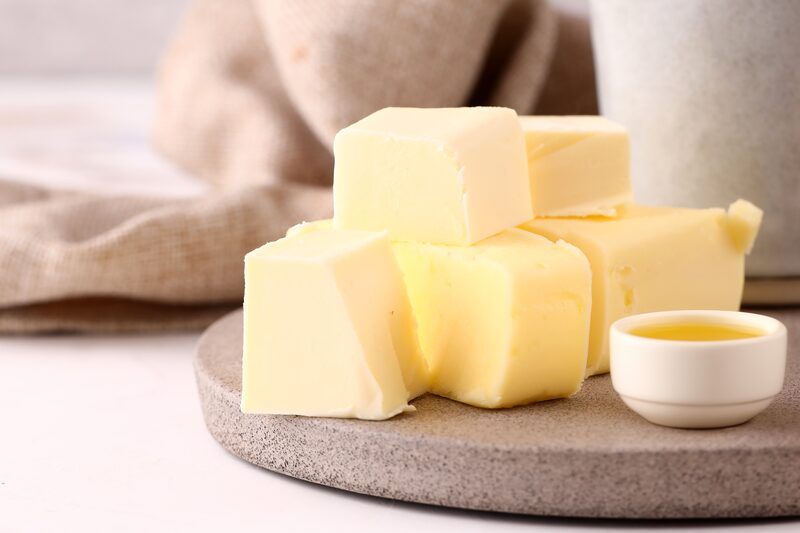
| Butter | About 80% | 90–95°F / 32–35°C | Flavor. Creams well and browns. The rest is water and milk solids. | Cookies, cakes, pastry |
| Cocoa butter | 100% | 93°F / 34°C | Holds firm right up until it melts, then goes all at once. | Chocolate work |
| Vegan butter, block or stick | 70–80% | 95–105°F / 35–40°C | Moderate spread, good height. Creams like butter but softens faster. | Cookies, cakes, frosting |
| Shortening and palm | 100% | 110–120°F / 43–49°C | The least spread and the most height. No flavor of its own. | Pie crust, tall cookies, frosting |
Swap coconut oil for vegan butter in a cookie at the same weight and you get a different cookie, even if nothing else changes. Wider, flatter, crisper at the edge.
Vegan butter varies a lot by brand. Blocks and sticks sit near the top of that fat range. Tubs sit at the bottom and carry even more water, so never bake with the tub.
How much fat each bake needs
These are baker's percentages. Your flour and starch together are 100%, and the fat is measured against that. If your flour weighs 1,000 g and you're making muffins at 30%, that's 300 g of fat.
| Bake | Fat, as a share of the flour | For 300 g of flour |
|---|---|---|
| Lean bread, sourdough | 0–5% | 0 to 15 g |
| Enriched dough, brioche, donuts | 8–15% | 24 to 45 g |
| Pancakes, waffles | 10–20% | 30 to 60 g |
| Muffins, quick breads | 25–40% | 75 to 120 g |
| Layer cakes | 35–50% | 105 to 150 g |
| Scones, biscuits | 40–50% | 120 to 150 g |
| Cookies | 40–60% | 120 to 180 g |
| Brownies | 50–70% | 150 to 210 g |
| Shortbread, pie crust | 50–70% | 150 to 210 g |
Read it top to bottom and you're reading from structure to tenderness. Bread needs its starch to set firm and hold gas, so it gets very little fat. Shortbread is meant to snap and crumble, so it gets a lot.
Too little fat and a bake is sandy and stale fast. Too much and it's greasy, flat and dense. Gluten-free formulas usually sit at the higher end of each range.
The recipe builder Where does your fat land? This is the tool I built to run my bakery. Type in a recipe and it shows the fat as a percentage of your flour, right next to the range for that kind of bake. Try it free →How to swap butter and oil
Butter is about 80% fat. The rest is mostly water. Oil is 100% fat. Swap them one for one and you've added fat and taken out liquid in the same move. The result is greasy and dry in the same bite.
- Oil in place of butter: use about 80% of the weight, and add the difference back as liquid. Replacing 200 g of butter? Use 160 g of oil and about 35 g of milk, plant milk or water.
- Butter in place of oil: go the other way. Replacing 160 g of oil? Use 200 g of butter and take about 35 g of liquid out.
- Coconut oil counts as oil. It's all fat, so the same 80% rule applies. Have your other ingredients at room temperature or it sets into lumps.
- If the recipe creams the butter, oil can't hold that air. The bake will be softer and a little denser.
- Oil is a fat, not a liquid. Count it as liquid and the recipe looks wet on paper and bakes dry in the pan.
Which oil to reach for
For baking you want an oil that's neutral and stable. These are the two I use in nearly every recipe, and when I'd use the others.
| Oil | Flavor | Use it for |
|---|---|---|
| Hi-oleic sunflower oil | Neutral | My everyday baking oil. It holds up to heat and keeps bakes fresh longer. Hi-oleic safflower works the same way. |
| Coconut oil | Mild coconut if unrefined, none if refined | Baking, and anywhere you want a fat that sets firm. |
| Avocado oil | Neutral | Baking, roasting and frying. It takes high heat. |
| Extra-virgin olive oil | Strong and fruity | Olive oil cake, focaccia and savory bakes. It can take over a sweet one. |
| Canola and other neutral oils | Neutral | They work the same way in a recipe. |
| Flax, walnut and hemp oil | Nutty | Not for baking. Heat breaks them down. Use them raw. |
My own preference is to skip soybean, corn, cottonseed and grapeseed oil and anything sold as a vegetable oil blend. I go into why in choosing the right oils.
Cold, soft or melted
The same fat gives three different bakes depending on its temperature when it goes in.
| The fat is | What happens | Use it for |
|---|---|---|
| Cold and solid | It stays in pieces. Those melt in the oven and leave flaky layers. | Pie crust, biscuits, scones |
| Soft, room temperature | It creams with sugar and traps air. | Cakes, cookies, frosting |
| Melted, or oil | It coats everything evenly. No air, so the crumb is dense and moist. | Brownies, muffins, chewy cookies |
Vegan butter reaches room temperature in about half the time dairy butter does. Don't leave it out too long before you cream it. More in the creaming method.
When to add it
You choose which of fat's jobs wins by when you add it.
- For structure and shelf life, hydrate first and add fat after. Mix the flour, binder and liquid. Let it rest. Then stream in the oil. Gluten-free flours take up water slowly, and psyllium needs free water to gel. Oil that goes in with the flour coats it before it can drink.
- For short and crumbly, fat goes first. Pie crust, shortbread, scones and biscuits. You cut the fat into the dry flour to block the water on purpose.
- For creamed cakes and cookies, fat and sugar get creamed first and the flour goes in last. You're trading some hydration for lift.
What fat doesn't do
Fat does not hold water. It repels it. Your starch and your binder hold water. Fat only slows the loss. So if a bake comes out dry, more fat is the wrong first move. Check the liquid and the binder first. A dry dough with extra oil is greasy and dry at once, which is the worst of both.
More in what fat does.
What to buy, and what to spend
The label has to say high oleic or hi-oleic. Regular sunflower oil is a different oil. It's neutral, so it works in everything from muffins to brownies.
Start hereFor vegan butter, check the label and pick the one with the most fat. Skip anything in a tub. It's made to spread, not to bake.
Refined has no coconut taste. Unrefined, or virgin, tastes like coconut. Buy the one that fits what you bake.
You don't need all three. One neutral oil and one solid fat cover almost every recipe. Not sure which fat a recipe wants? Ask me below.
What went wrong? Tap your problem
Fat explains a lot of texture problems, but not all of them. For each one, here's the fat answer and what else to check.
Greasy
Too much fat for the flour. Or oil was swapped for butter one for one, so there's more fat and less water.
The fix: Check the fat against the range for that bake. When you swap oil for butter, use 80% and add liquid.
- The fat was too warm, so it leaked out before the bake set.
- It was underbaked.
- Almond flour or nut butter added fat you did not count.
Go deeper: Don't skimp on the nut butter · Gluten-free flours
Dry and sandy
Too little fat. Nothing is coating the flour, so it reads as grit and stales fast.
The fix: Bring the fat up toward the middle of its range, 10% at a time.
- Not enough liquid. Check this first.
- Not enough binder.
- Coarse rice flour, or a batter that did not rest.
Go deeper: Gluten-free flours · Binders
Cookies spread flat
The fat melted before the dough could set. Coconut oil, warm butter, or dough that went in warm.
The fix: Use a fat that melts later, chill the dough, and bake it from cold or frozen.
- Too much white sugar.
- Too little flour, from measuring by the cup.
- An oven that is too cool.
Go deeper: Bake straight from frozen · Sugars
Cookies won't spread
The fat melts too late or there isn't enough of it. Shortening and cold dough both hold a cookie up.
The fix: Swap part of the shortening for butter or oil, or press the dough balls down a little before baking.
- Too much flour.
- Too much powdered sugar.
- An oven that is too hot, so the outside sets first.
Go deeper: Oven temperatures · Sugars
Tough or rubbery
Not enough fat to keep the flour from bonding tightly.
The fix: Bring the fat up, or cut it into the flour first for scones and crusts.
- A wheat dough that was worked too long.
- Too much binder.
- It was overbaked.
Go deeper: Binders · Internal temperatures
Stale by day two
Too little fat to slow the starch down. Or the oil went in before the flour had its water.
The fix: Check the fat range, and hydrate the flour before you add the oil.
- Not enough sugar.
- It was stored in the fridge.
- It was overbaked.
Go deeper: Make your bakes last longer · Storage and shelf life
Tastes off, like paint
The oil or butter has gone rancid.
The fix: Smell your fat before it goes in. Keep oil cool, dark and capped, and wrap butter tight.
- A nut flour or whole-grain flour that turned.
- Butter that soaked up a fridge smell.
Go deeper: Storage and shelf life
Quick questions
Can I substitute oil for butter in baking?
Yes. Use about 80% of the butter weight in oil and add the difference back as liquid. For 200 g of butter, that is 160 g of oil and about 35 g of milk, plant milk or water.
Is butter or oil better for cake?
Oil gives a softer, moister cake that stays soft longer. Butter gives more flavor and, when it is creamed, more lift. Many cakes use some of each.
What is the best oil for baking?
A neutral oil that holds up to heat. I use hi-oleic sunflower oil. Avocado, canola and refined coconut oil also work.
Can I use coconut oil instead of butter?
Yes, but treat it as an oil. It is all fat, so use about 80% of the butter weight and add liquid. Expect more spread, because coconut oil melts at 76°F.
Why did my cookies spread so much?
The fat melted before the dough set. Chill the dough, bake it from cold or frozen, and use a fat that melts later, like butter or shortening in place of coconut oil.
Is vegan butter the same as butter in baking?
Close, but not the same. It usually carries more water, softens faster and spreads faster in the oven. Buy a block or stick with the most fat you can find, never a tub.
Does oil count as a liquid in a recipe?
No. Oil is a fat. It does not hydrate flour. Count it with the fat, not with the milk or water.
Ten quick ones before you go
Get 7 right and the lesson is done.
What are fat's two big jobs in a bake?
What decides how far a cookie spreads?
Which fat gives the tallest cookie with the least spread?
About how much of butter is fat?
You are replacing 200 g of butter with oil. How much oil?
How much fat does a muffin want?
Can oil be creamed with sugar to trap air?
In a gluten-free muffin batter, when does the oil go in?
Your bake came out dry. What do you check first?
Which vegan butter do you bake with?
Ask me about fats and oils
Not sure which fat to use, or how to swap one? Ask here. I read every question, and your answer helps the next baker too.