Choosing the Right Oils for Healthier Baking
A baker's guide to oils — choosing not just for taste but for health, quality, and performance.
Omega-3 vs. omega-6 balance
The modern Western diet is overloaded with omega-6 fatty acids (from soybean, corn, cottonseed, grapeseed, and non–hi-oleic sunflower or safflower oils). Excess omega-6 skews the body's ratio, driving inflammation.
Omega-3s (from flax, chia, hemp, walnuts, and algal oil) balance this out, supporting heart, brain, and joint health.
Ideal ratio: 1:1 to 1:4 (omega-3 to omega-6). Western diets often hit 1:15+. Choosing the right oils is the fastest way to correct this imbalance.
Hi-oleic vs. linoleic sunflower oil
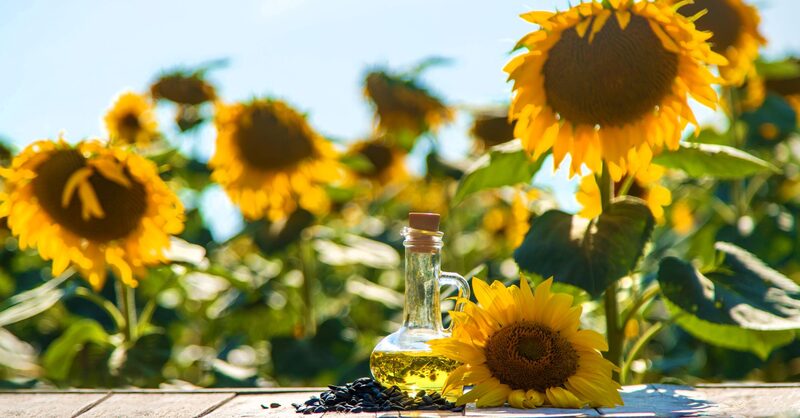
Two of our staple oils are hi-oleic organic sunflower oil and organic coconut oil, and here's why we use them in nearly every recipe.
Hi-oleic sunflower oil is high in oleic acid (a heart-healthy monounsaturated fat also found in olive oil). It makes the oil more stable, resistant to oxidation, and better for long shelf life.
Linoleic sunflower oil is high in polyunsaturated omega-6 fats, which are fragile, prone to oxidation, and can contribute to oxidative stress (inflammation and cell damage) when consumed in excess.
This difference is why we specifically choose hi-oleic — it's healthier, safer for baking, and keeps our goods fresh longer.
Safflower vs. sunflower oil
Regular safflower and sunflower oils are often high in linoleic acid (unstable omega-6).
Hi-oleic versions of both are far more stable and health-protective. These are the only versions worth cooking with or baking with.
Organic coconut oil
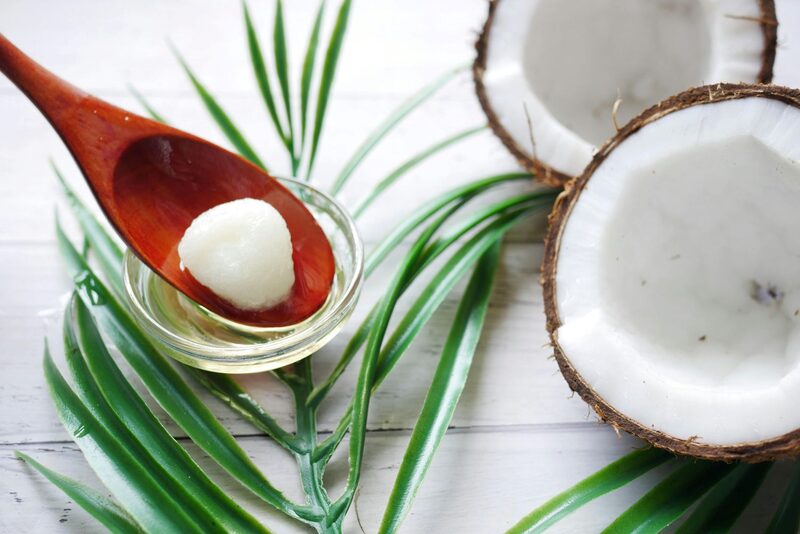
Coconut oil is naturally rich in medium-chain triglycerides (MCTs) and stable saturated fats — mainly lauric acid, which is more neutral to heart health than other saturated fats. These resist oxidation, keeping baked goods fresher for longer. It also adds a subtle richness without overpowering flavor.
Coconut oil solidifies at 76°F, and can be used as a 1:1 substitute not only for other oils but for butter as well — great for vegan baking.
Olive & avocado oils
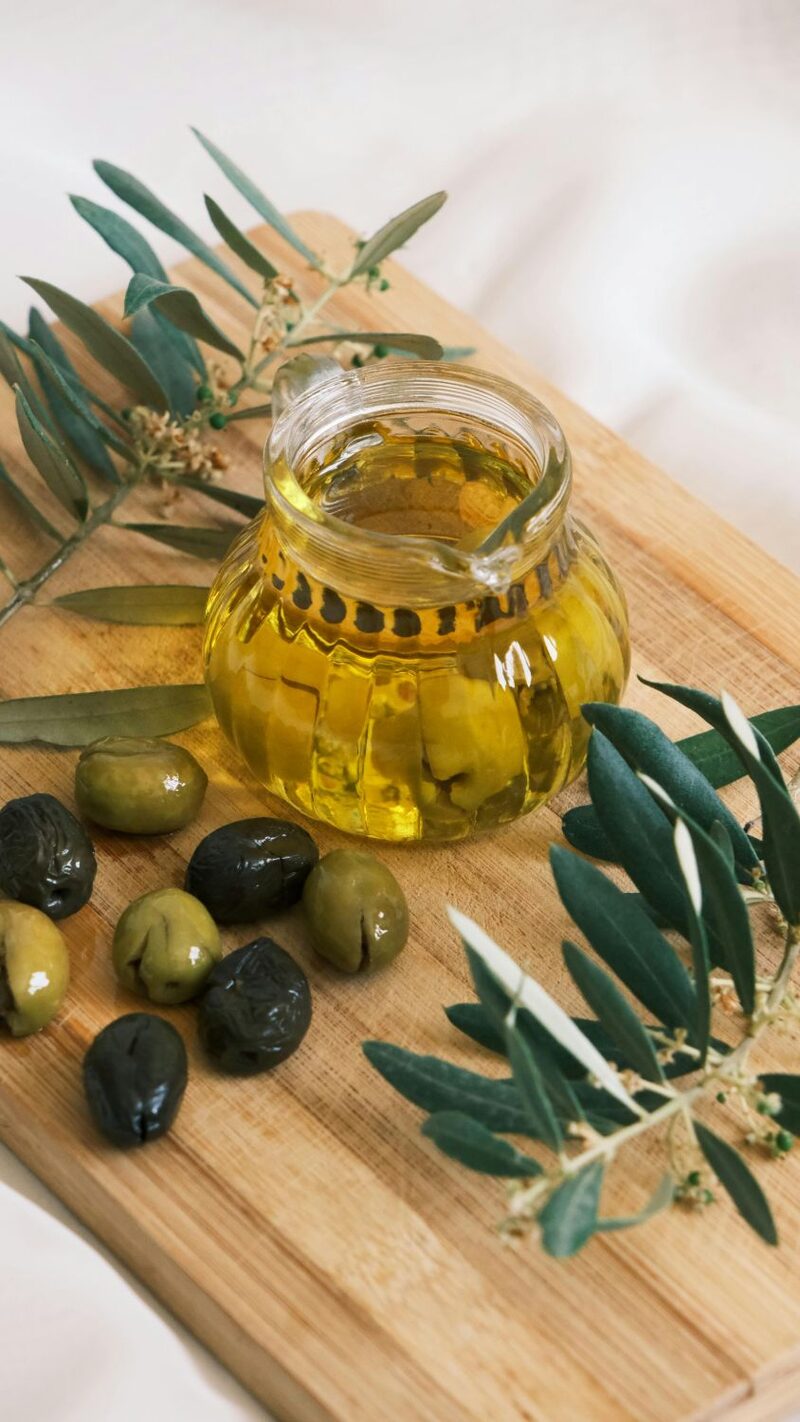
Extra-virgin olive oil is rich in antioxidants and oleic acid — best for salads, drizzling, or low- to medium-heat cooking. Olive oil's smoke point is lower (~375°F) and it has a distinct flavor that can overpower baked goods.
Avocado oil has similar health benefits to olive oil but with a higher smoke point (~500°F), making it excellent for roasting, sautéing, or frying.
Oils for salads, smoothies & juices
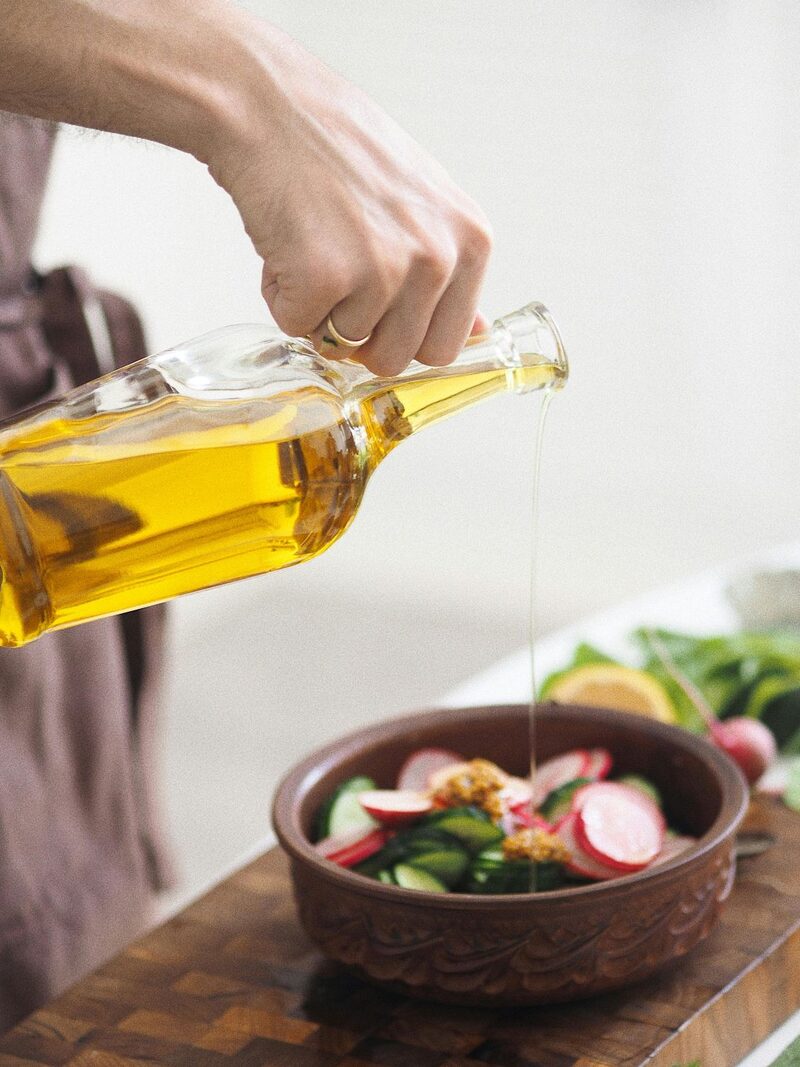
Why add oil? Vitamins A, D, E, and K, plus carotenoids (like beta-carotene in carrots), are fat-soluble. Without oil, your body barely absorbs them. This practice helps balance omega-3 intake while enhancing nutrient absorption from fruits and vegetables.
Flaxseed, chia, walnut, or hemp oils (rich in omega-3 ALA) are all oils that are meant to be used raw. If heated they oxidize, lose nutrients, and can form harmful compounds.
Oils to stay away from
Soybean oil, corn oil, cottonseed oil, grapeseed oil, and "vegetable oil blends."
These are cheap, refined, usually GMO, and loaded with omega-6. They oxidize easily, shorten shelf life, and contribute to inflammation.
Everyday guide: which oil to use when
- For baking (under 350°F): coconut oil, hi-oleic sunflower oil.
- For frying / roasting: avocado oil, hi-oleic sunflower oil.
- For salads & drizzling: extra-virgin olive oil, walnut oil.
- For smoothies / juices: flax, chia, or hemp oil (raw only).
- For everyday cooking: olive oil for gentle heat, avocado oil for higher heat.
We bake everything under 350°F to prevent oxidation and keep oils stable.
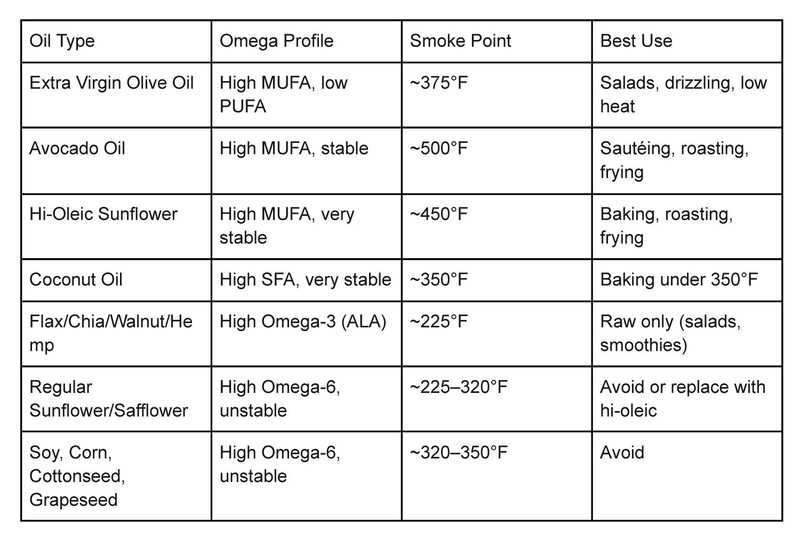
Quick reference oil chart
Glossary
MUFA: monounsaturated fatty acids — heart-healthy, stable fats (found in olive, avocado, and hi-oleic sunflower oils).
PUFA: polyunsaturated fatty acids — essential but fragile fats (like omega-3 and omega-6). Easily oxidized, especially at high heat.
SFA: saturated fatty acids — very stable fats (like in coconut oil). Best for baking and shelf life.
ALA: alpha-linolenic acid — a plant-based omega-3 found in flax, chia, hemp, and walnuts. The body can convert small amounts of it into EPA and DHA, the omega-3s found in animal-based sources like fish.
Why do smoke points matter?
When oil is heated beyond its smoke point, it begins to:
- Break down chemically — forming free radicals and harmful compounds.
- Produce acrolein — the substance that gives burnt oil its harsh, bitter smell and taste.
- Lose nutrients and antioxidants — meaning fewer health benefits.
- Increase oxidative stress in the body when consumed, potentially leading to inflammation and long-term health risks.
That's why we never push oils beyond their safe temperature range.
Final thoughts
At Sensible Bakery, we use hi-oleic organic sunflower oil and organic coconut oil in nearly every recipe. They support longer shelf life, resist oxidation, and deliver real health benefits without sacrificing flavor.
For home cooking:
- Use avocado or hi-oleic sunflower oil for high-heat cooking.
- Use extra-virgin olive oil for salads, drizzling, or low-heat dishes.
- Add flax, chia, walnut, or hemp oil raw to juices and salads for omega-3 balance and better vitamin absorption.
Because food isn't just about flavor — it's about health, longevity, and balance.
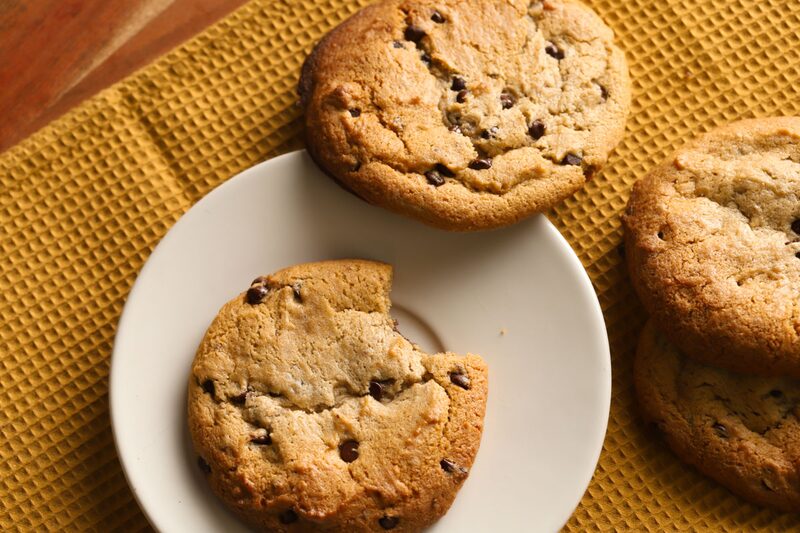
Cookies baked with care
Made with hi-oleic organic sunflower oil and organic coconut oil — the same oils we recommend for your kitchen.
Shop cookies at Sensible →