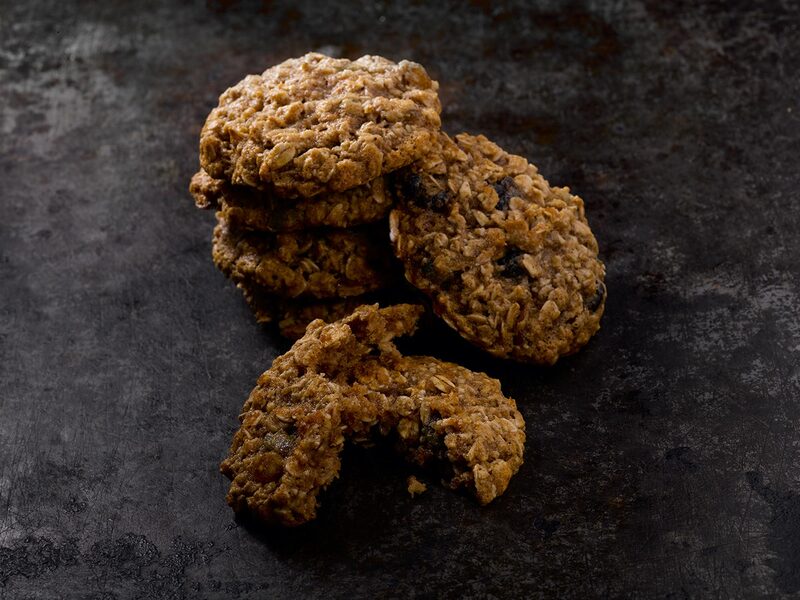
Oatmeal Raisin Cookies
Chewy, soft-centered, gluten-free and vegan — the bakery oatmeal raisin, scaled down for your kitchen. Creamed butter and brown sugar build the chew; oat flour and rolled oats do the structure.
Skip to recipe ↓This is the oatmeal raisin cookie we make at the bakery, scaled down to a home batch of about a dozen. Gluten-free, vegan, and genuinely chewy — not the dry, sandy kind gluten-free cookies usually turn out to be.
The chew comes from two moves: creaming softened vegan butter with the sugars to build structure and lift, and leaning on brown sugar, whose molasses keeps the crumb soft. Oat flour and rolled oats carry the body, a little applesauce keeps them tender, and a pinch of xanthan holds it all together.
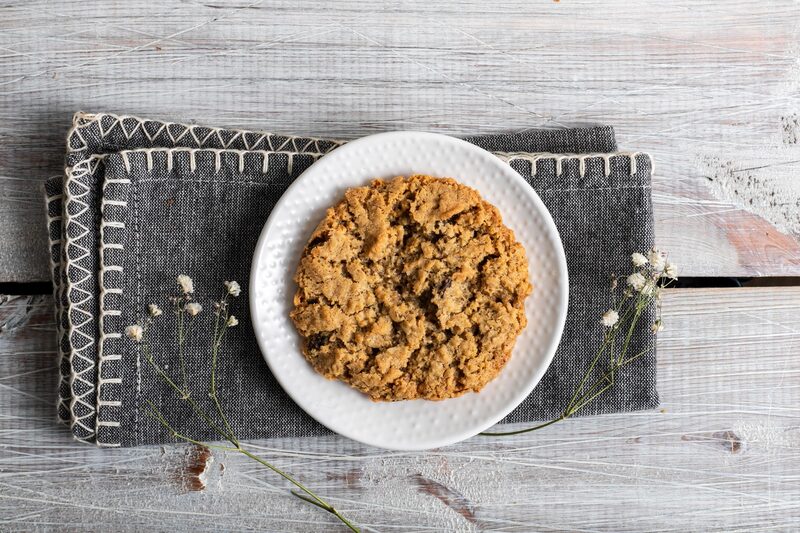
Why they’re chewy, not cakey
Cream the butter and sugars. Beating softened vegan butter with the brown and cane sugar works air into the fat and starts building structure before anything hits the oven. Melt the butter instead and you trade that chew for a flatter, greasier cookie.
Brown sugar does the heavy lifting. Its molasses holds onto moisture, so these stay soft for days instead of drying out by the next morning. That’s why brown outweighs cane here, not the other way around.
Oats and oat flour, not a starch blend. Rolled oats give the chew and the bite; oat flour binds the crumb without going gummy. A quarter teaspoon of xanthan is all the extra structure you need, and the applesauce keeps the center tender.
Bake by eye
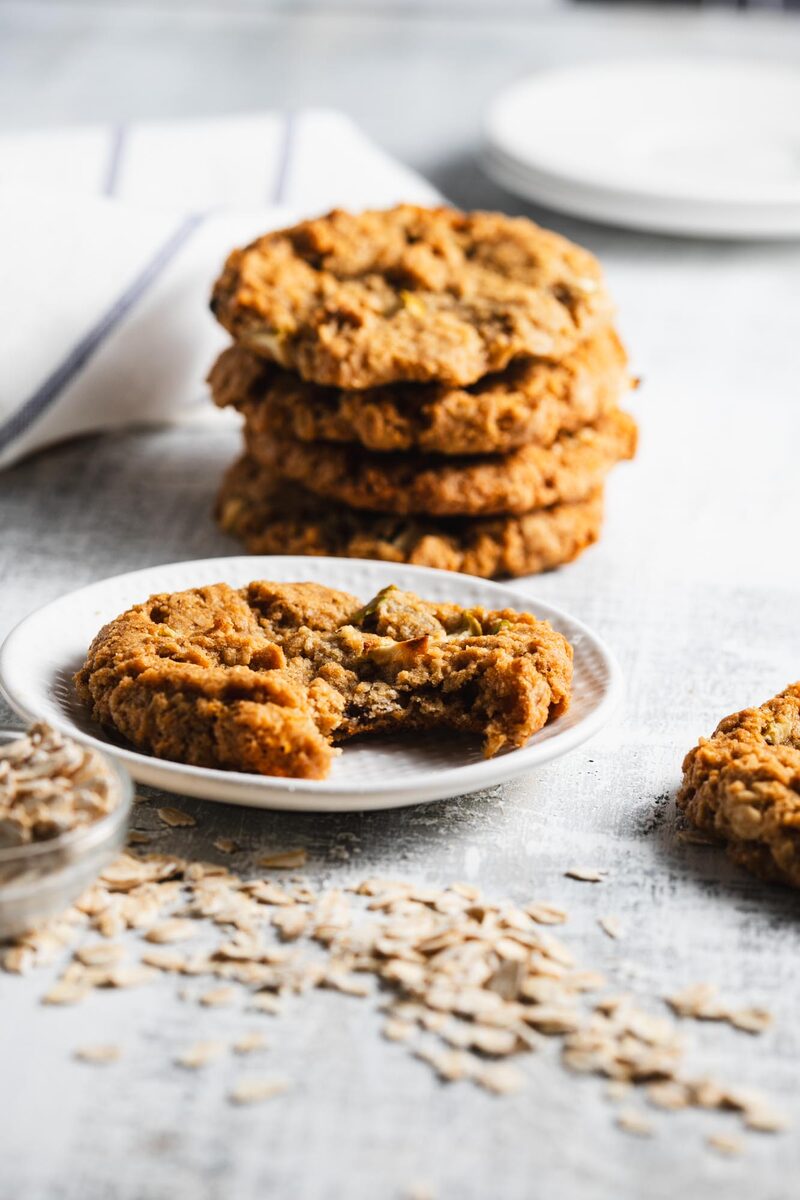
340°F for about 18 minutes. Pull them when the edges are set and golden and the centers still look soft and slightly underbaked — they finish setting on the hot pan. The timer is a starting point; your eyes make the call. Give them five minutes on the sheet before you move them, or they’ll break.
Chewier or crisper? Flatten the dough a little more and bake an extra minute for crisp edges; leave the mounds taller and pull a touch earlier for a softer, thicker cookie.
Make them yours
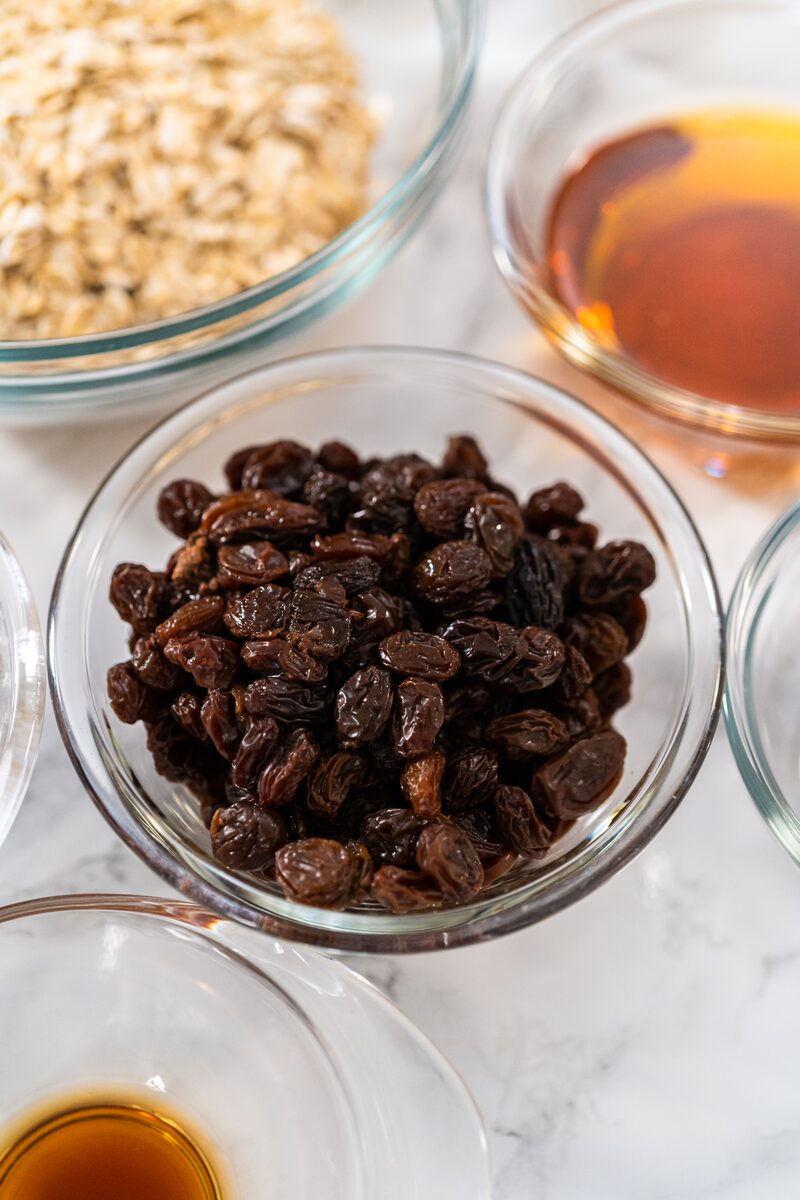
Swap the raisins. Chocolate chips or chopped chunks, dried cranberries, cherries, or chopped apricots all work at the same weight. Half raisins, half chocolate is a good one.
Add-ins. A handful of chopped walnuts or shredded coconut folds right in without changing the dough. Keep total add-ins around what the raisins weigh so the cookie still holds together.
On the oats: buy certified gluten-free. Oats are naturally gluten-free but are frequently processed on shared equipment with wheat, so standard oats carry real cross-contamination risk.
Storage. Airtight at room temperature for four to five days — the brown sugar keeps them soft. They freeze well baked, or freeze the shaped dough and bake straight from frozen, adding a couple of minutes.
Oatmeal Raisin Cookies
Equipment
- Kitchen scale
- Stand or hand mixer
- Mixing bowl and spatula
- Cookie scoop
- Flat-bottomed glass (for flattening)
- Baking sheet and parchment
Ingredients
- 150g certified gluten-free rolled oats
- 112g brown sugar
- 107g vegan butter, softened
- 73g cane sugar
- 69g oat flour
- 44g raisins
- 18g unsweetened applesauce
- ½ tsp baking soda
- ¼ tsp salt
- ¼ tsp xanthan gum
- ⅛ tsp cinnamon
Method
- Cream the butter and sugars. Beat the softened vegan butter with the brown sugar and cane sugar until light and fluffy, 2 to 3 minutes. This is where the chew and lift come from, so don’t rush it.
- Add the applesauce. Beat in the applesauce until smooth and emulsified.
- Add the dry ingredients. Add the oat flour, baking soda, xanthan gum, salt, and cinnamon. Mix just until combined.
- Fold in oats and raisins. Fold in the rolled oats and raisins until evenly distributed. The dough will be soft.
- Scoop and flatten. Scoop the dough onto a lined baking sheet and press each ball down to about ½ inch thick. If the dough has warmed up while you work, chill the tray for 15 minutes before baking.
- Bake. 340°F (170°C) for about 18 minutes, until the edges are set and golden and the centers still look soft. Judge by eye, not the timer — they firm up as they cool.
- Cool on the sheet. Give them five minutes on the hot pan before moving them. Gluten-free cookies are fragile while warm and will break if you rush them onto a rack.
Storage
Store in an airtight container at room temperature for up to four to five days. They soften over time as the oats continue to absorb moisture, which most people prefer.
You can also freeze the raw scooped-and-flattened dough for up to three months. Just bake straight from frozen when you’re ready, adding two minutes to the total bake time.
Want the oats without the baking?
Chewy, nutritious, and no need to turn on the oven. Get oatmeal cookies with delicious raisins, chocolate chunks, or apple fresh from Sensible Bakery.
Shop Cookies →