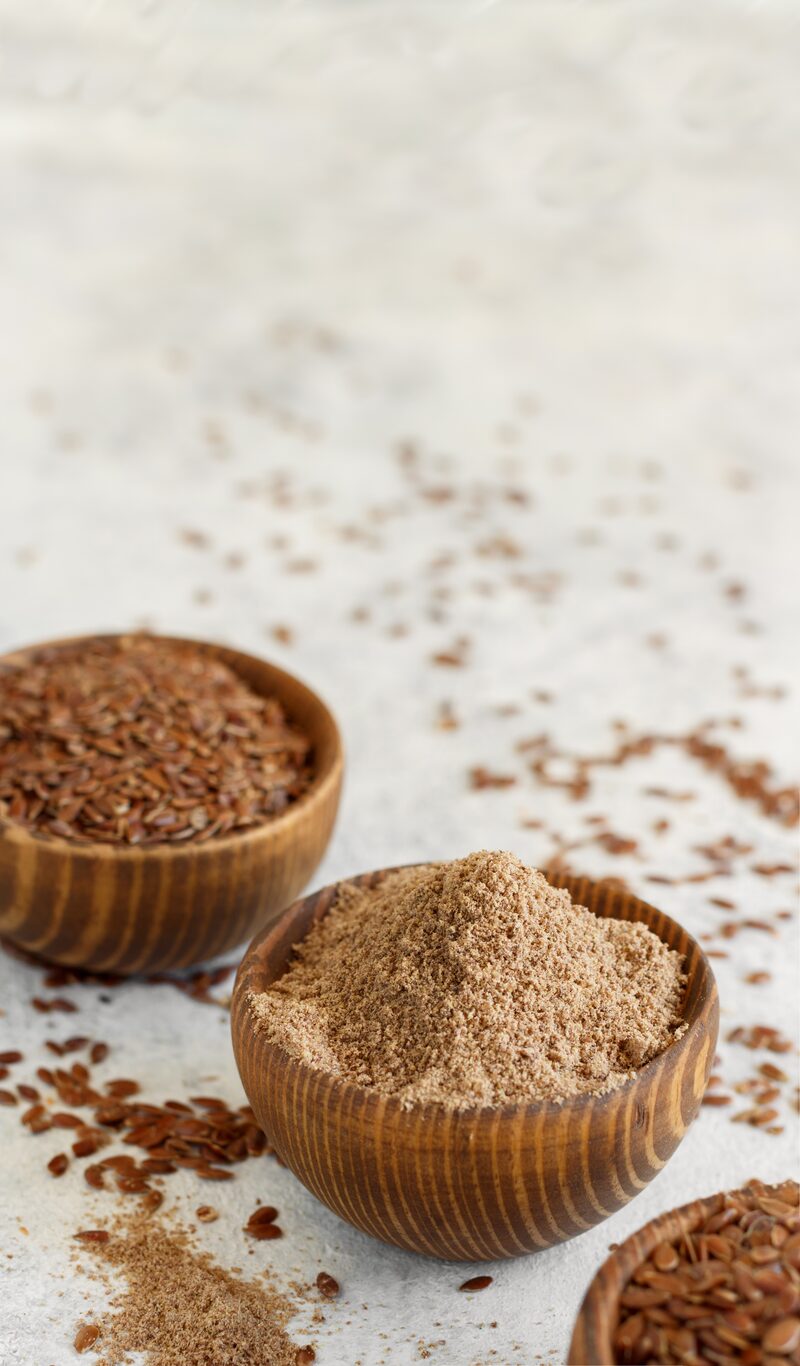
Two Ways to Use Flax in Your Baking
Flax meal does two completely different jobs depending on how you add it. Mix it with water and it binds; add it dry and it behaves like a flour.
Flax meal is one of those ingredients that does completely different jobs depending on how you add it. Mix it with water first, and it becomes a binder. Add it dry, and it behaves like a flour. Same ingredient, two outcomes. Here’s how to do both correctly, plus a trick I use to get more out of a flax egg.
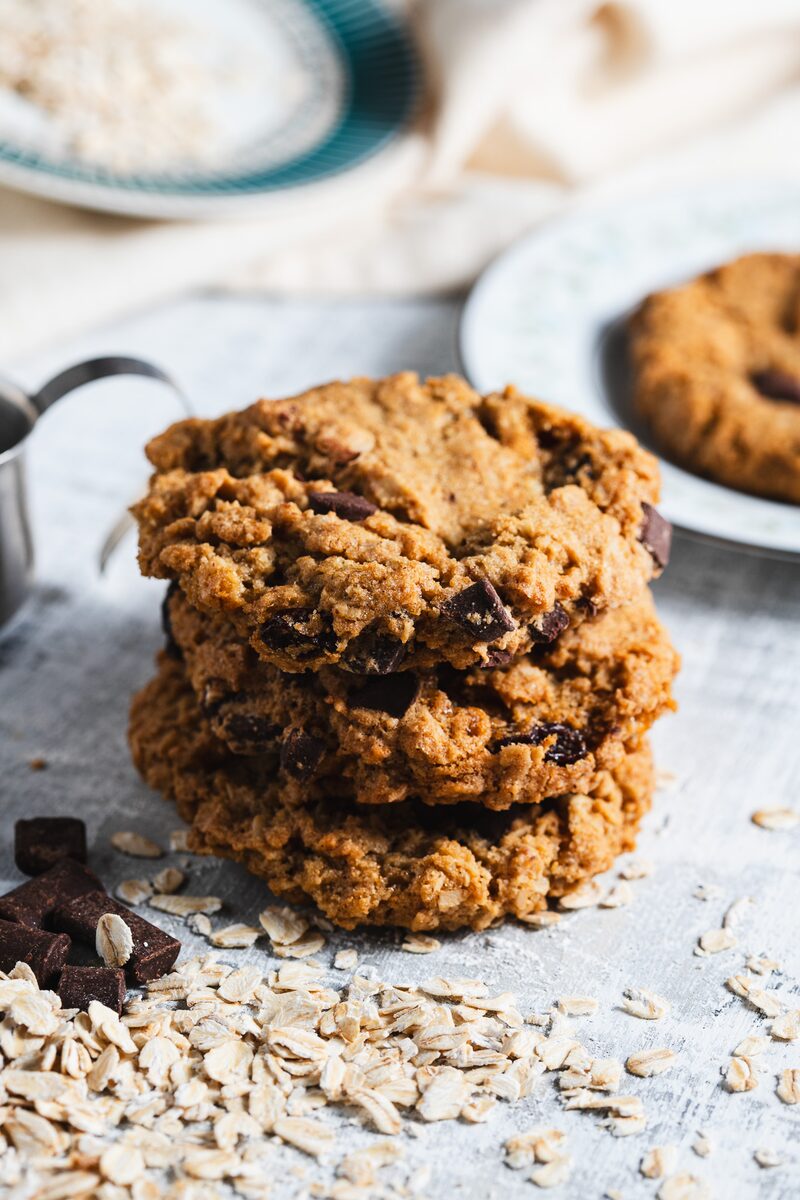
When to use which
Before you grab the flax, know what you’re trying to accomplish.
Use a flax egg when you’re baking eggless and need something to hold the structure together. The hydrated gel binds your batter the way an egg would, giving you cohesion and moisture retention. The tradeoff is a denser crumb and a little less rise.
Use the dry flax (flour) method when your recipe already has eggs or another binder, and you’re not trying to replace anything. This is also the move when you just want the health benefits in a recipe that already works. Folding flax into your dry ingredients gives you the fiber, the omega-3s, and the lignans without rebuilding the recipe or changing the rise.
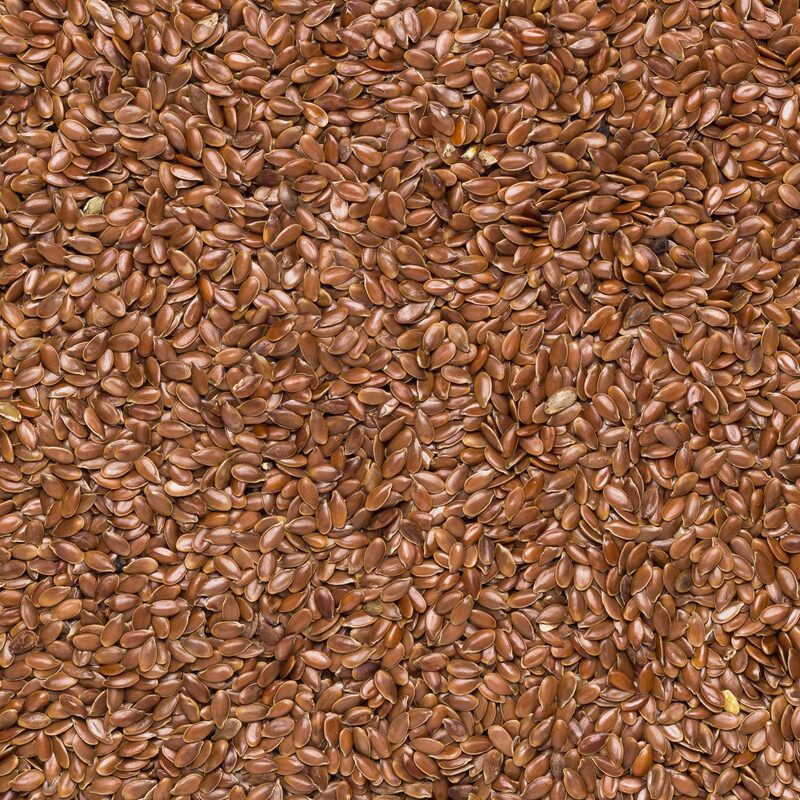
How to make a flax egg
The standard ratio replaces one egg:
- 1 tablespoon (about 7 g) flax meal
- 3 tablespoons (about 45 g) water
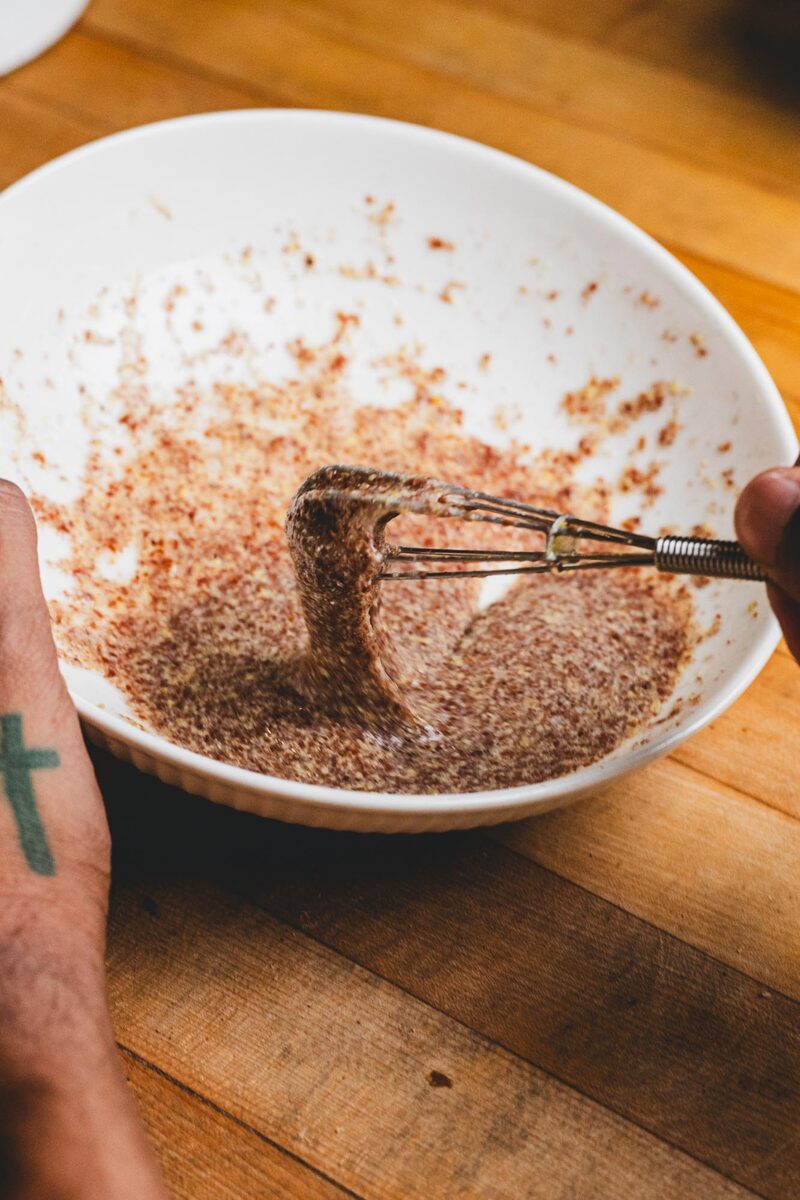
Stir the flax into the water and let it sit for 5 to 10 minutes until it thickens into a gel. That gel is the mucilage—the soluble fiber in the seed coat—pulling in and locking up the water. Once it’s gelled, it’s ready to go into your batter as a binder.
Cap it at replacing two eggs per recipe. Beyond that, the structure starts to suffer, because a flax egg binds and holds moisture but doesn’t fully replicate what egg protein does when it sets under heat. You’ll need to make up for the loss in lift and structure by adding baking powder and psyllium husk, respectively.
My flax egg trick
Here’s how I get more out of a flax egg in my own batters. Instead of just stirring the flax and water together, I add a touch of psyllium husk or xanthan gum to the flax and water, then hit it with an immersion blender.
Two things happen. First, the blending whips a bit of air into the mixture, which helps offset some of the density you’d otherwise get from a flax egg. Second, the psyllium or xanthan reinforces the gel, so it holds structure better in the finished bake. You end up with a binder that’s stronger and a little lighter at the same time. A small pinch is all you need; these gums are powerful, and too much will turn your gel gummy.
How to add flax to your dry ingredients (the flour method)
When you skip the pre-hydration and add flax straight to your dry ingredients, the flax stops acting as a binder and starts acting as a flour. It competes with your starches for the liquid in the recipe, hydrating during the mix and the bake. If you don’t account for that, it pulls free water away from the rest of the batter and dries out your crumb. There are two rules to keep this clean.
Keep it to 10–15% of your total flour. Push past that, and you’re back to a dense crumb and a pronounced flax flavor that takes over the bake. Ten to fifteen percent gives you the nutrition and a subtle nuttiness without dominating.
Add an equal amount of liquid to counteract absorption. Flax can absorb two to three times its weight in water. My rule of thumb is to add roughly an equal weight of liquid to match the flax I’m adding. So if I add 50 grams of flax to my dry ingredients, I add around 50 grams of liquid alongside it to keep the crumb from drying out.
A worked example
Say your recipe calls for 500 g of flour and you want to fold flax in at 12%:
- Replace 60 g of flour with 60 g of flax meal (440 g flour + 60 g flax)
- Add about 60 g of extra liquid to cover the flax’s absorption
That keeps the hydration of your batter where it needs to be, so the muffin or loaf rises like normal without the flax impacting the structure.

Fluffy muffins made with flax eggs
We’ve spent twenty years dialing in egg-free recipes that don’t crumble, sink, or fall flat. Try them straight from the bakery.
Shop at Sensible →