
Why Baking Soda and Baking Powder Are Not the Same (And Why You Need Both)
They look identical and both make things rise, so why do recipes call for both?
People assume baking powder and baking soda are interchangeable. They sit next to each other on the shelf, they're both white powders, they both make things rise. So why would any recipe need both?
Because they don't do the same job. One controls your rise. The other controls your color and flavor. Once you understand the difference, you stop guessing and start engineering your bakes.
Baking Soda
Baking soda is pure sodium bicarbonate. On its own, in a dry bowl, it does nothing. It only releases CO2 (the gas that lifts your batter) when it meets an acid.
Common acids in baking:
- Buttermilk
- Brown sugar and molasses
- Cocoa (natural, not Dutch-processed)
- Sourdough starter
- Lemon juice, vinegar, yogurt
When soda hits one of these, you get lift. But lift isn't the main reason I reach for it — it's pH.

Baking soda raises the pH of your dough, which accelerates the Maillard reaction and browning. That's why cookies made with soda come out golden and deeply flavored instead of pale and flat. It also affects spread and texture.
However, you need to be careful: too much soda leads to a soapy, metallic taste and over-browning. It has to be balanced against the acid in your recipe.
Baking Powder
Baking powder is baking soda plus a dry acid and a little starch to keep it stable. Because the acid is already built in, it lifts no matter what else is in your bowl. It doesn't depend on your recipe being acidic.
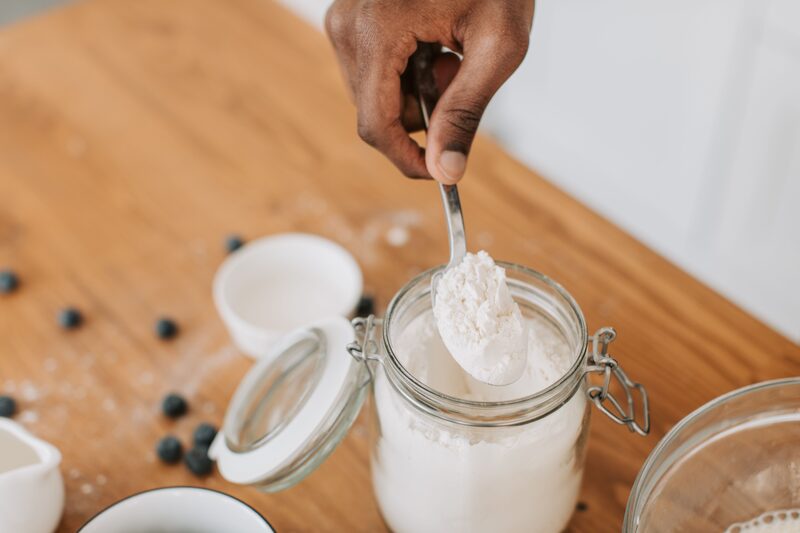
Most baking powder today is double-acting, meaning it releases gas in two stages: once when it gets wet, and again when it hits oven heat. That second release is what gives you a reliable, even rise during baking.
This is your insurance policy. Baking powder delivers consistent lift regardless of the other ingredients.
So, Why Use Both?
Here's the part nobody explains.
The acidic ingredients in a typical recipe usually aren't enough to fully react with all the baking soda you'd need for a proper rise. You're often working with a fixed amount of buttermilk, brown sugar, or cocoa, and that only neutralizes so much soda.
So you split the work:
- Baking soda is dialed in to neutralize the acid you do have, and to deliver the browning, flavor, and texture that come with a higher pH.
- Baking powder fills in the remaining lift you can't get from the available acid alone.

Together, they let you control two things independently: how your bake rises and how it browns and tastes. That's the whole reason both end up in the ingredient list.

Perfectly Risen, Every Time
At Sensible Bakery, every bake is engineered for the right rise, color, and crumb. Vegan and gluten-free treats made with professional precision.
Shop at Sensible →