5 Gluten-Free Baking Tips I Use Every Day in a Commercial Kitchen
Gluten-free baking doesn't fail because of bad recipes. It fails because of misunderstood fundamentals. Here are the five that matter most, straight from my commercial kitchen.
I've spent over 20 years in professional kitchens, most of them running the largest gluten-free and vegan bakery in New York City. In that time, I've learned that gluten-free baking doesn't fail because of bad recipes. It fails because of misunderstood fundamentals.
These are the five that matter most. Get them right and your gluten-free baking changes completely. I've added a few extra techniques at the end that I use constantly in production.
1. Bake Second-Day Batter
Gluten-free flours and starches absorb water slowly. When you mix and bake the same day, the liquid hasn't fully penetrated the flour particles yet, and you end up with a sandy, gritty texture in the crumb.
Mix your batter, cover it, and let it rest in the fridge overnight. The starches and fibers fully take in the liquid, everything in the batter settles into even suspension, and you get a smoother, more tender crumb. Same-day batter is the single most common reason home gluten-free bakes turn out gritty.
And don't worry about losing your leavening overnight — the baking powder bubbles won't disperse. As the batter rests, you build a network of starch and psyllium that holds all those small air bubbles in place until they hit the oven.
2. Measure by Weight, Not Volume
A cup of gluten-free flour can vary wildly in weight depending on how it's scooped, settled, or which flours are in the blend. Volume measuring guarantees inconsistency, while weight measuring fixes it.
Weighing is the only way to get repeatable results batch to batch, and it's the only way to scale a recipe up or down without it falling apart. This is how every professional bakery works, and it's the fastest upgrade a home baker can make.
3. Gel Your Psyllium Husk First
Psyllium husk is one of the most important tools in gluten-free baking, but you have to hydrate it before it goes into your dough. Whisk it with water and let it set into a gel first.
That gel is what gives your dough structure you can actually shape and handle, something gluten-free dough normally lacks. Add psyllium dry, and it keeps pulling water out of your dough during the bake, which is exactly how you end up with a gummy crumb.
4. Use an Internal Thermometer
Gluten-free baked goods are denser than wheat-based ones, so heat moves through them differently, and color on the outside tells you very little. A golden top and a clean toothpick don't mean the inside is done.
Use an internal thermometer. And because gluten-free bakes hold moisture longer, I leave items in the oven an additional 2–5 minutes past where they look done to drive off that extra moisture and avoid gumminess.
5. Build Your Own Flour Blend by Category
Muffins, cookies, and bread all need different structures. A muffin wants tenderness, a cookie wants spread and chew, a bread wants strength. No single store-bought all-purpose gluten-free flour can do all three well.
Build your blend to fit the category you're making. Once you understand what each flour and starch contributes — structure, chew, tenderness, lightness — you can dial in a blend that actually serves the product instead of fighting it.
A Few More Techniques From My Kitchen
Use vinegar and salt. A small amount of acid reacts with baking soda for extra lift and tenderizes the crumb, and you won't taste it in the finished bake. Don't skimp on salt either, since without gluten to carry flavor, salt does more of the work bringing everything forward. Together, they make a noticeably better-tasting, better-risen bake.
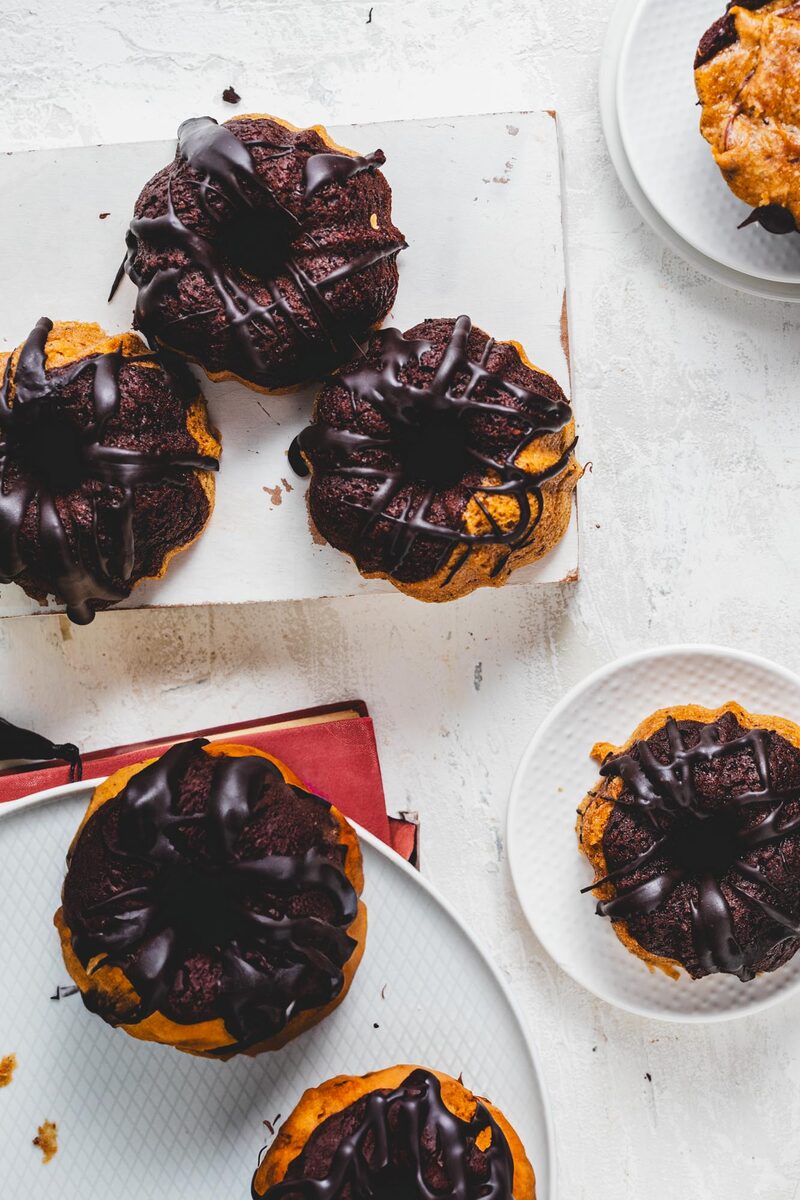
Bloom your cocoa. Whisk cocoa powder into a hot liquid before adding it to your batter. It dramatically deepens chocolate flavor and dissolves the powder, so you don't get dry pockets in the crumb.
Know when to use xanthan vs. psyllium. They're not interchangeable. Xanthan gum is for cakes, cookies, and muffins — it provides structure and binding in batters. Psyllium husk is for breads and anything you need to shape and handle — it builds the elastic, extensible structure that replaces gluten. Reach for the wrong one and the texture falls apart.
Pick your flours by function. Each one does a specific job, so build your blend around what you're making. Oat flour brings softness and extends shelf life. Potato starch holds water and gives a delicate crumb. Tapioca starch adds chew. Once you know what each contributes, you stop guessing and start engineering the texture you want.
Fundamentals you can taste
Every bake at Sensible Bakery is built on these same techniques — twenty years of gluten-free and vegan know-how in every bite.
Shop at Sensible →